Automotive Shop Equipment for Professional Service Facilities
Stickney Equipment helps automotive repair shops, fleet facilities, commercial garages, and other vehicle service operations evaluate automotive shop equipment based on their available space, vehicles, workload, and long-term facility needs.
Equipment Planned Around the Way Your Shop Operates
Automotive shop equipment affects how vehicles move through a facility, how technicians access each work area, and how efficiently the available space can be used. Equipment decisions should therefore be based on more than the size of an individual machine or the maximum capacity listed on a product.
Stickney Equipment helps customers evaluate garage and service-bay needs based on vehicle types, expected workload, available floor space, working clearance, existing equipment, and future plans for the operation.
Whether a customer is opening a new automotive facility, upgrading an established repair shop, or replacing older equipment, practical planning can help create a more organized and functional working environment.

Equipment Selection
Shop equipment should be selected around the vehicles serviced, the work performed, available space, and the daily operating needs of the facility.
Facility Planning
Equipment placement should preserve vehicle movement, technician access, working clearance, storage, and practical use of each service bay.
Ongoing Support
Stickney Equipment also supports customers with automotive lift installation, repair, maintenance, inspections, parts, and accessories.
Automotive Shop Equipment for Different Service Operations
Every automotive facility has different vehicle requirements, service goals, and space limitations. Equipment planning should reflect how the business actually operates.
Independent Repair Shops
Independent shops may service a varied mix of passenger cars, SUVs, light-duty trucks, and other vehicles. Equipment should provide practical flexibility without overcrowding the facility.
Fleet Service Facilities
Fleet operations can plan equipment around recurring vehicle types, maintenance schedules, technician workflow, and the service demands of the fleet.
Commercial Garages
Commercial facilities may require equipment that supports higher workloads, multiple service bays, varied vehicle sizes, and coordinated movement throughout the shop.
New and Expanding Shops
Facilities adding services or opening new bays should consider how each equipment decision affects the complete shop layout and future expansion.
Consider the Entire Shop Before Choosing Equipment
A piece of automotive shop equipment does not operate in isolation. It affects vehicle approach, technician movement, nearby tools, storage, utility access, working clearance, and the use of surrounding service bays.
Reviewing the complete facility before choosing equipment can help prevent crowded work areas, restricted vehicle movement, and conflicts between different pieces of shop equipment.
- Vehicle sizes and weight ranges
- Available floor and overhead space
- Service-bay dimensions
- Vehicle entry and exit paths
- Technician access and working clearance
- Existing tools, storage, and equipment
- Current workload and future expansion plans
Build the Facility Around the Work You Perform
The appropriate automotive shop equipment depends on the services offered by the business. A facility focused on general automotive repair may have different needs than a fleet operation or a shop working with larger vehicles.
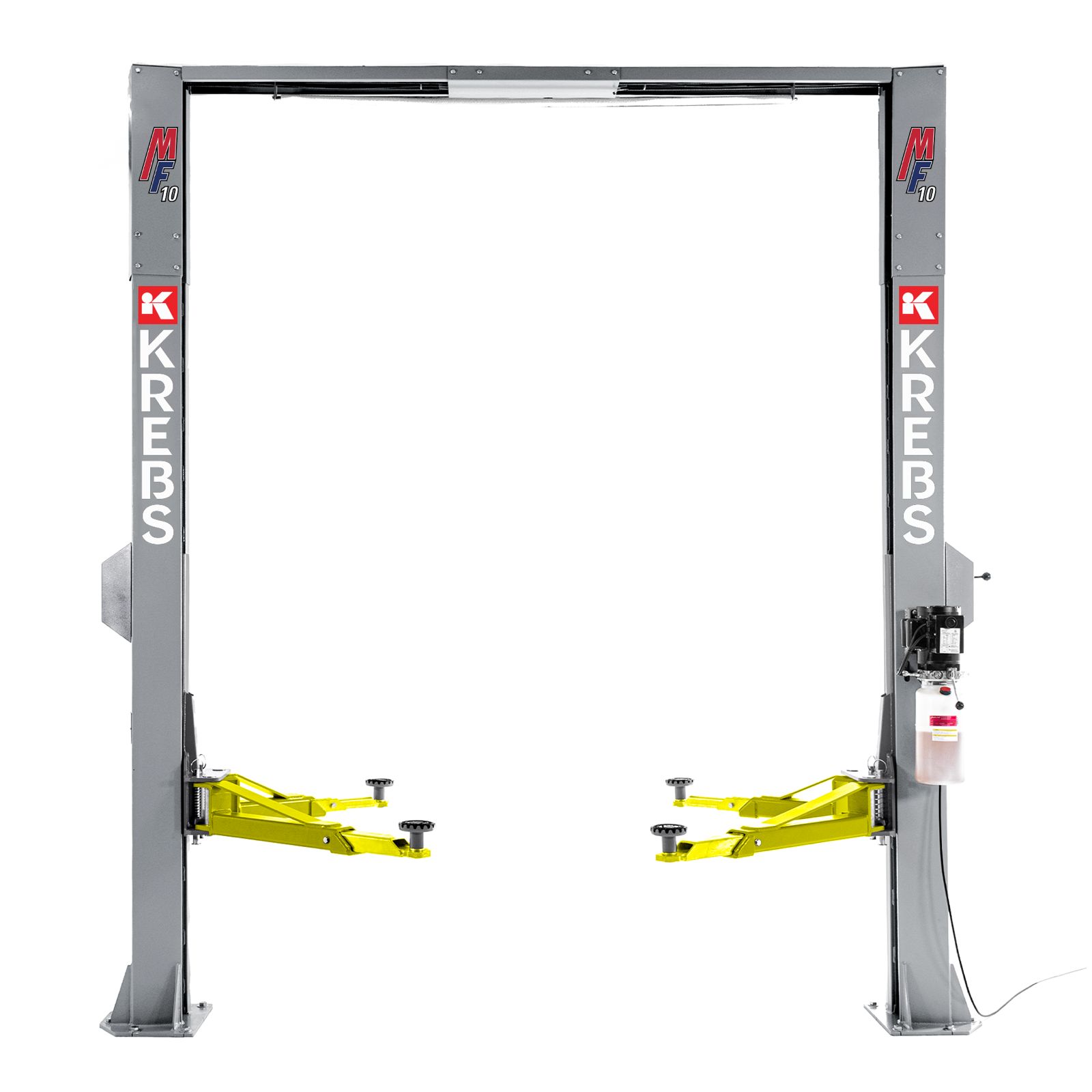
Vehicle lifts are often central to the service-bay layout because they influence vehicle position, technician access, ceiling clearance, and the placement of nearby equipment.
Related shop equipment, lift accessories, and facility systems should be considered together so the final setup supports a practical workflow.
Lift Solutions for Different Shop Applications
The correct lift depends on vehicle weight, wheelbase, frame design, lifting points, available space, and the work performed inside the service bay.
Automotive lifts may support passenger cars, SUVs, light-duty trucks, and other suitable vehicle applications.
Heavy-duty lift equipment should be selected around commercial vehicle dimensions, operating weight, wheelbase, and service requirements.
Above-ground automotive lifts keep their primary structure visible within the service bay and require careful layout planning.
In-ground lift systems place a substantial portion of the equipment below the shop floor and may help preserve an open bay layout.
Properly matched adapters and accessories may help support different vehicle heights, wheelbases, frames, and lifting points.
Equipment Planning for New Shops and Existing Facilities
New facilities and established garages face different planning challenges, but both benefit from reviewing equipment as part of the complete shop.
New Shop Planning
A new facility can plan service bays, equipment placement, vehicle movement, storage, and working areas before operations begin.
Equipment Upgrades
Existing shops may replace older equipment, add capacity, improve vehicle compatibility, or reorganize the available workspace.
Shop Expansion
Facilities adding bays or services should consider how new equipment will interact with current operations and future plans.
Equipment Should Support Efficient Vehicle Movement
Equipment placement can influence how easily vehicles enter the facility, move between service areas, and leave after work is complete. A poorly planned layout may create unnecessary turning, backing, congestion, or technician interference.
Shop owners should also consider access to tools, storage areas, controls, and the underside of raised vehicles. The final layout should provide enough working room for the services performed in each bay.
Stickney Equipment helps customers evaluate these practical factors when discussing automotive shop equipment and lift solutions.

Support Beyond the Initial Equipment Selection
Automotive shop equipment requires more than an initial purchasing decision. Proper installation, routine maintenance, inspections, repairs, and correctly matched replacement parts can all affect the long-term use of the equipment.
Stickney Equipment supports customers who are selecting new lifts, upgrading existing equipment, addressing lift problems, or looking for compatible parts and accessories.
This connected approach helps customers treat lift equipment as an important part of the complete facility rather than a one-time purchase.

Practical Guidance for Automotive Shop Equipment
Stickney Equipment helps customers evaluate equipment based on the real requirements of the garage, the vehicles being serviced, and the way the facility operates.
Vehicle-Focused Planning
Equipment recommendations should reflect the sizes, weights, wheelbases, and lifting requirements of the vehicles the shop regularly handles.
Facility-Focused Decisions
Available space, service-bay layout, technician movement, storage, and existing equipment should guide the final setup.
Connected Lift Services
Customers can also request lift installation, maintenance, inspections, repair support, parts, and accessories.
Local Equipment Support
Stickney Equipment serves automotive operations throughout Greater Lakeland, Tampa Bay, and surrounding Central Florida communities.
Automotive Shop Equipment Across Central Florida
Stickney Equipment serves repair shops, fleet facilities, commercial garages, and other automotive operations throughout Greater Lakeland, Tampa Bay, and surrounding Central Florida communities.
Questions About Automotive Shop Equipment
What should I consider when choosing automotive shop equipment?
Consider the vehicles being serviced, available floor and overhead space, service-bay dimensions, technician access, expected workload, existing equipment, and future facility plans.
Can Stickney Equipment help plan equipment for a new repair shop?
Stickney Equipment can help customers evaluate automotive shop equipment based on vehicle requirements, available space, service-bay use, workflow, and planned operations.
Do you provide automotive lifts for professional shops?
Yes. Stickney Equipment provides auto lift and heavy-duty truck lift solutions for suitable repair shops, fleet facilities, and commercial automotive operations.
Can you help an existing shop upgrade its equipment?
Stickney Equipment works with existing facilities that are replacing older equipment, adding service capacity, improving vehicle compatibility, or reorganizing shop space.
Why is equipment placement important in an automotive shop?
Equipment placement affects vehicle movement, technician access, working clearance, storage, tool use, and the practical operation of nearby service bays.
Does Stickney Equipment install automotive lift equipment?
Yes. Stickney Equipment provides professional auto lift installation for suitable automotive repair shops, commercial facilities, fleet operations, and home garages.
Do you provide service for existing automotive lifts?
Stickney Equipment provides automotive lift repair, maintenance, inspections, parts, and accessories based on the equipment and confirmed service need.
What areas does Stickney Equipment serve?
Stickney Equipment serves Lakeland, Dover, Plant City, Tampa, Brandon, Riverview, Valrico, Seffner, Bartow, Winter Haven, Clearwater, Saint Petersburg, and surrounding Central Florida communities.
Discuss Automotive Shop Equipment With Stickney Equipment
Tell us about your facility, available space, vehicle types, current equipment, expected workload, and the shop improvements you are considering.